
A massive financial effort to prepare for the closure of the Pig’s Eye Park encampment has left St. Paul officials admitting defeat after a combined investment of nearly 2.2 million dollars resulted in only seven people moving into new shelter beds. The funding, split between the city and Ramsey County, was intended to ensure that displaced residents had a safe place to go once the camp was cleared. However, Assistant Mayor Cedrick Baker told the City Council this week that the initiative was not a success, noting that far fewer individuals accepted the available space than leadership had hoped.
The scale of the spending became a point of contention during recent council presentations when City Council President Rebecca Noecker discovered that Ramsey County had contributed 1.1 million dollars on top of a separate city payment of over one million. Noecker, who had made the expansion of shelter beds a condition for her support of the clearing, described such emergency expenditures as expensive band-aids. She argued that while immediate funds are necessary during crises, the city lacks the long term systemic investments required to provide permanent housing and dignity to those experiencing homelessness.
Despite the low numbers linked directly to Pig’s Eye Park, some providers argue the investment still holds value for the community at large. Keith Kozerski of Catholic Charities Twin Cities noted that his organization added 49 beds thanks to this partnership and has already seen a forty percent increase in visitors at their connected daytime center since the closure. While he could only confirm one guest specifically from Pig’s Eye Park due to a low barrier policy that avoids intrusive questioning, he warned that without these extra beds, many more people would likely be turned away as temperatures drop this winter.
Looking forward, Council President Noecker emphasized that simply adding beds is not enough before any future encampments are cleared. She suggested that unless the city learns how to better meet people where they are and provides comprehensive supports beyond temporary shelter, similar failures will continue. Meanwhile, representatives from both the mayor’s office and Ramsey County have maintained that expanding capacity remains essential given the broad regionwide struggle with housing instability and homelessness.
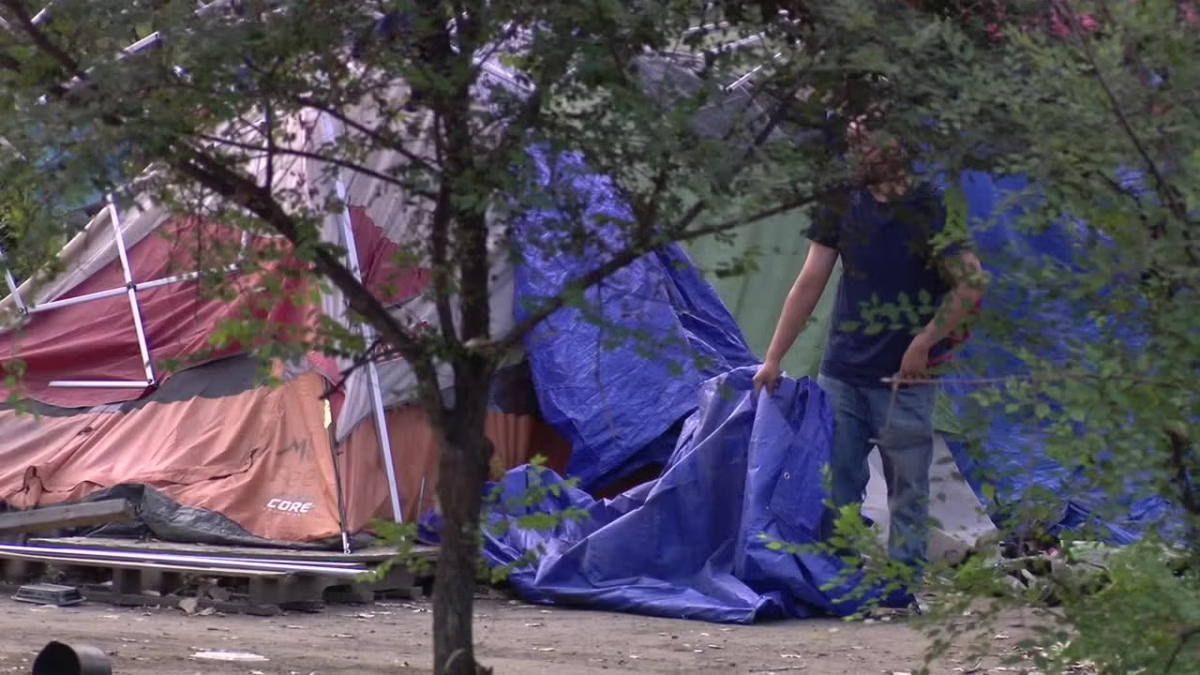
‘Not a success’: $2.2M shelter investment helps just 7 people after St. Paul camp closure
 By admin
5 views
By admin
5 views